Greg Trinidad has a habit of being there before the rest of the world catches on.
Follow Greg on LinkedIn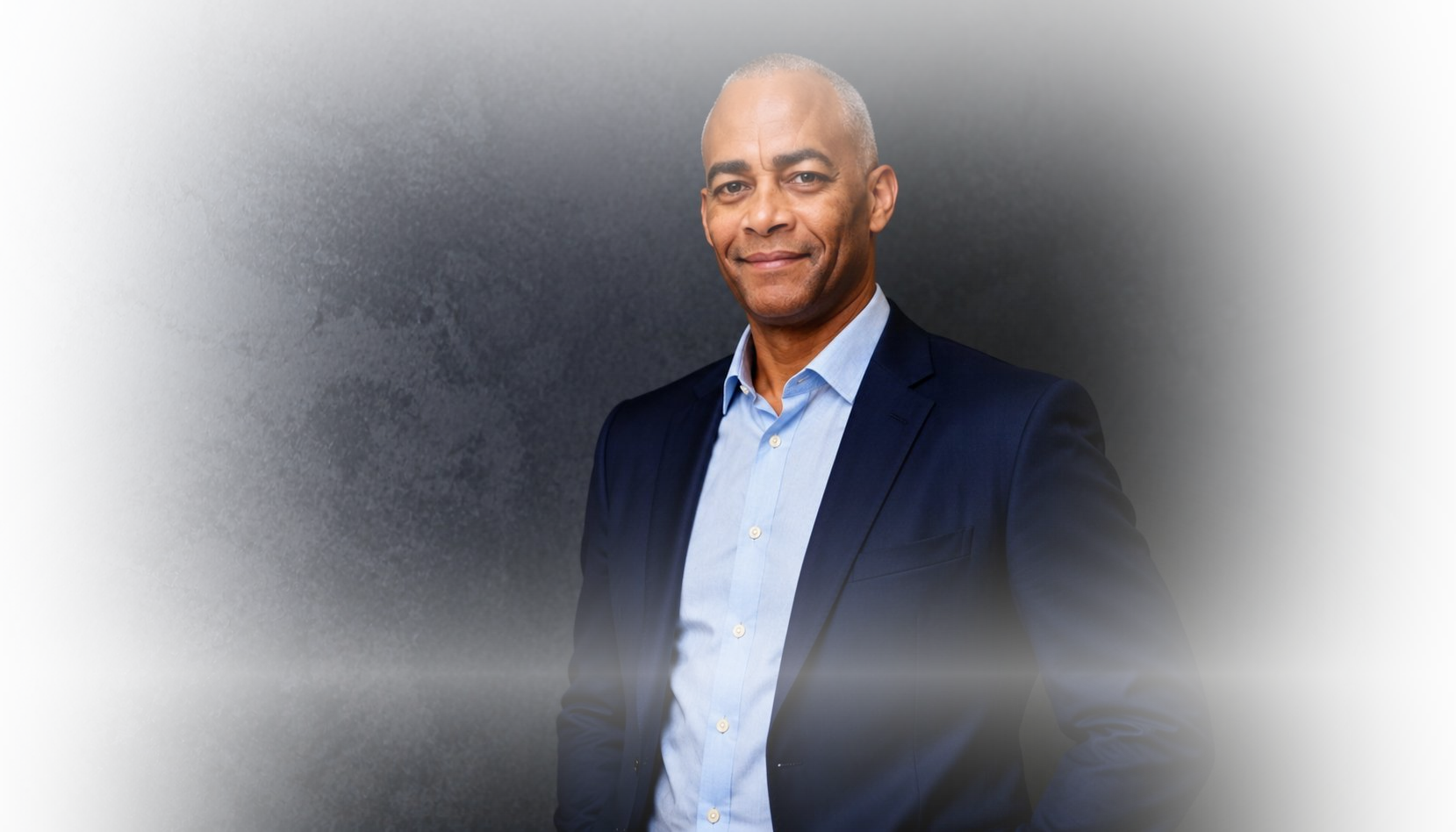
Twice before, he stood at the start of a shift. Once in mobile banking. Once in hospitality. Now again.
The story in 9 partsBanking via a mobile phone, in a country without banks.
In 2002 he co-founded BelCash in the Netherlands with his partners. A few years later the company moved to Addis Ababa to do something nobody thought possible: banking via an ordinary mobile phone, in a country without banking infrastructure.
As Co-Founder and Director of Marketing Operations, Greg sat across the table from regulators, ministries and banks. The team taught people who had never held an account how to receive and send money via SMS.
Today, that's how East Africa banks.
A market that officially didn't exist.
At the same time, Greg was working in Amsterdam on something completely different.
Short Stay Group had just started with short-stay rentals in Amsterdam. A market that officially didn't exist. Hotels were hotels, houses were houses, nothing in between. Renting out an apartment for a few nights became a revolution, and later created the world in which Airbnb and Booking.com became the biggest names.
Short Stay Group wanted to grow. Greg was brought in as marketing and sales expert, and set up a dedicated call centre in Manila where the entire customer journey was managed: from first click to check-out.
The methodologySEO and SEA, then still uncharted territory, to attract visitors worldwide. Skype, webchat and email, new techniques at the time, to convert those visitors into paying customers.
The production · three desks- Sales deskEverything before you booked. Visitors called, emailed or chatted. The booking sat inside the conversation.
- CS deskEverything before your arrival. Is the neighbourhood safe for a family? If we're four people, are there really four towels? Can I still cancel? The team answered immediately. Cancellations dropped hard.
- HelpdeskEverything during your stay. Lost keys, no hot water, housekeeping a no-show. The team solved it, in direct contact with the concierge on site. No tickets, no wait time.
All by hand. Greg flew back and forth between Addis and Manila to keep both operations running. It worked. Short Stay Group grew to a thousand apartments across Amsterdam, Paris and Barcelona. Later became Yays. Now Numa Stays.
Booking.com started on the same Amsterdam street.
What Short Stay Group did by hand, with Skype and email, for a single chain, Booking did for the whole world. Ten years later, that revolution was complete.
For twenty years, websites were brochures.
In 2025, Greg started building AskHenk. In 2026, it went live.
For twenty years, websites were brochures. Visitors got lost in menus, forms sat untouched for days, chatbots irritated more than they helped. Only with agentic AI can a website do what businesses paid for all that time but never got: the actual work itself.
Four desks. Now inside Henk.
AskHenk is built on exactly the same playbook as twenty years ago. Sales, CS, helpdesk, plus an info-desk that didn't exist separately back then but now does: a Henk that answers every question before anyone even hesitates about a booking.
Sales Sells. Info Answers. CS Reassures. Helpdesk Resolves.Four desks, one visitor. But now the work sits inside Henk. He sells, he answers, he reassures, he resolves. Twenty-four hours a day. In every language. No ticket system, no wait time, nobody in Manila staying up.
SEO still works. SEA has been replaced by GEO and Demand Generation. The rest is Henk.
For any business, not just hospitality.
And what in 2005 was only possible for the hospitality market, expensive, complex, limited to one sector, can now work for any business.
A law firm still getting questions from prospective clients on a weeknight. An accountant explaining a rate on a Friday afternoon. A solar advisor with eight competitors on Google's first page. A municipality that wants residents to find what they're looking for without opening fifty PDFs. A coach who wants her website to listen as carefully as she does.
Six sectors, four production hubs.
AskHenk serves six sectors at once: finance, sustainability, legal, IT, services and public sector. The first client, Boekhoudlive, went live in May 2026 in South Holland. Five other sectors follow.
And unlike in 2005, this story is global from day one. AskHenk operates from a single Dutch parent organisation with production hubs on four continents: Venlo for the Netherlands and Belgium, Spain for the rest of Europe and Africa, Manila for English-speaking Asia and Oceania, Toronto for North and South America.
No aggressive outbound, Netherlands first, then Europe, then the world. But inbound leads are accepted from day one. An American client in October 2026 will be built by Toronto. A British client in March 2027 by Manila or Spain. Markets are earned first, before we enter them.
Twice before. Now again.
Twice before, Greg stood at the start of a shift. Once in mobile banking. Once in hospitality. Now again, but this time not for one market, and not for one type of business. This time for any business with a website.
A website is no longer a brochure.
A website is LIVE.
G.S. Trinidad
Founder AskHenk · Brightlands Campus, Venlo · May 2026
Every conversation you miss costs you money.
Half an hour, no sales pitch. We look at where your leads stall and what a desk would do about it. After that you know whether it fits.